Lovecraft's commonplace book
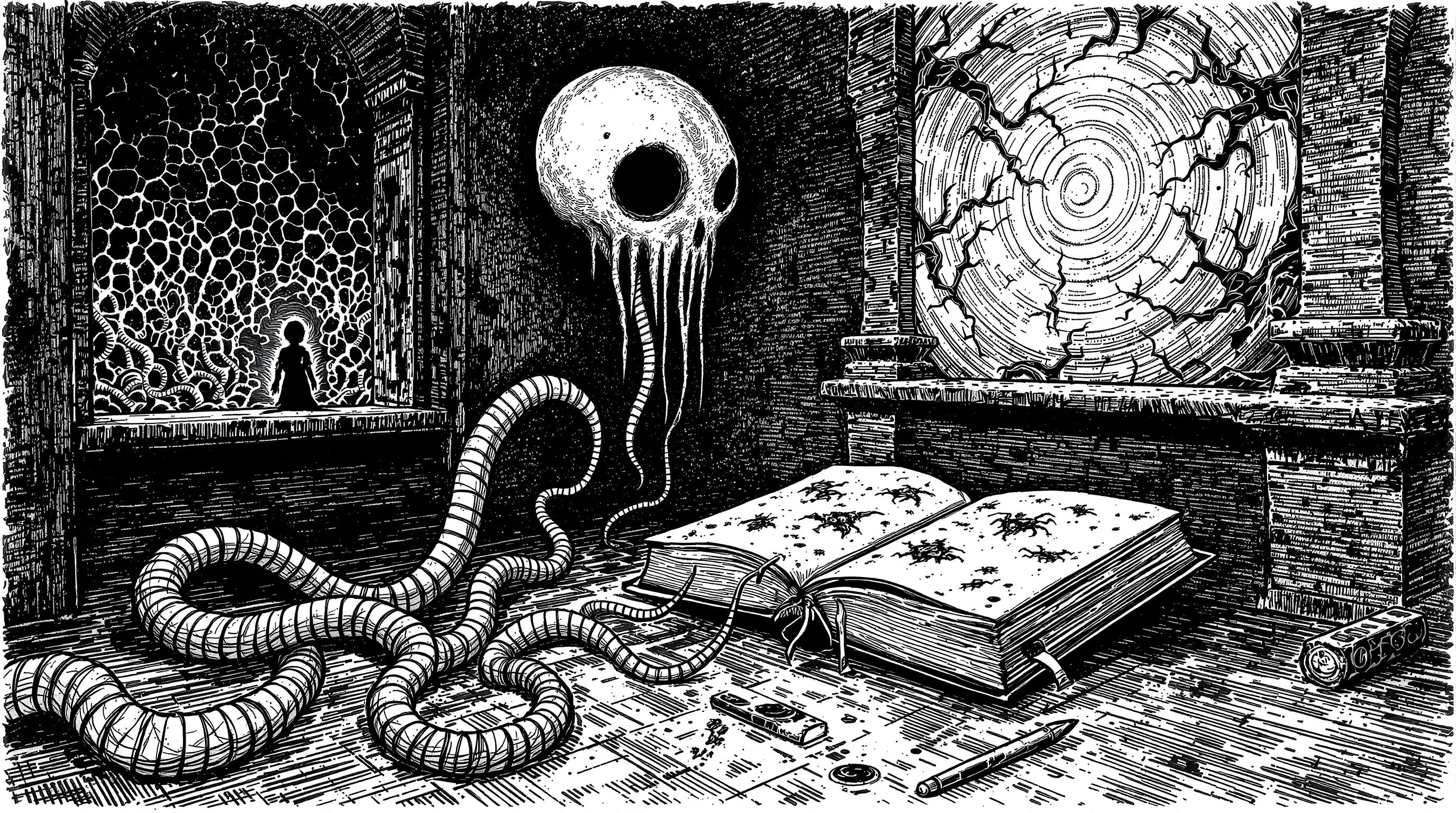
The beasts he never wrote: items that stayed notes.
Ideas, images, and the ones that stayed notes.
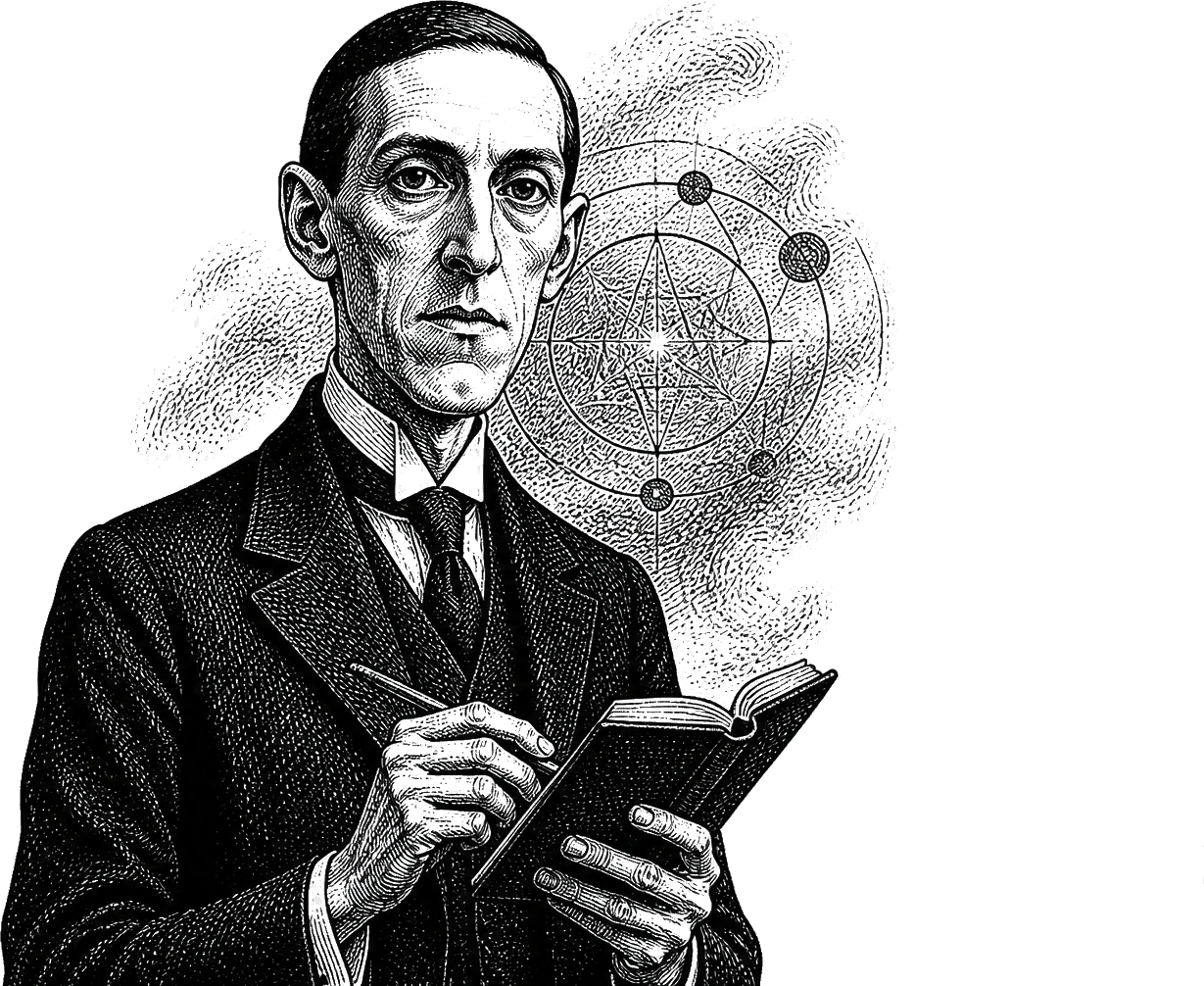
Lovecraft kept a commonplace book from 1919 into the 1930s. On Wikisource the 1938 Futile Press text prints his own headnote in full: the book is “ideas, images, and quotations hastily jotted down for possible future use in weird fiction.” Very few are developed plots. Most are “suggestions or random impressions designed to set the memory or imagination working.” Their sources are “dreams, things read, casual incidents, idle conceptions, and so on.”
He gave the typed copy to R. H. Barlow on 7 May 1934, “in exchange for an admirably neat typed copy from his skilled hand.”
The items are numbered and dated. Under 1919 he sets Demophon, who shivered when the sun shone on him: lover of darkness, ignorance. He sets a horror of falling: a man dreams of falling, and is found on the floor mangled as though from a vast height. He sets a museum visit that would become The Call of Cthulhu: a man brings a bas-relief he has just made; the curator will not take anything so modern; the man answers that “dreams are older than brooding Egypt or the contemplative Spinx or garden-girdled Babylonia.” Later, under the same year, a single line: “AZATHOTH: hideous name.”
He keeps from Dunsany and from encyclopaedias. He keeps the cat as “the soul of antique AEgyptus,” kin of the Sphinx and older than she, an item that would grow into The Cats of Ulthar. He keeps Life against Death: Death with bleak spaces and dead cities; Life with “vast unheard-of reptiles,” “rank slimy vegetation,” and the note that Life is the greater horror.
Elsewhere the keeper records what a commonplace book is for when the page will not give the item back: “To find something horrible in a perhaps familiar book and not to be able to find it again.” Another item is only scent and childhood: “Peculiar odor of book of childhood induces repetition of childhood fancy.”
What he actually collected was not a finished tale. It was an item under a date: a dream, a name, a thing read, ready for a later recollection, or for none.
How to keep a commonplace book · The letter · 1 · Opuss on the App Store
Sources: H. P. Lovecraft, The Notes & Commonplace Book (Futile Press, 1938), open on Wikisource. Prefatory note, Barlow dedication, and sample items under 1919-1920 as printed there.
How to keep a commonplace book
You may also like
The letter
Read issue 1. Ten we kept this week, and how to keep your own. Or start with how to keep.