
What Locke actually collected
Acherusia, Ebionites, and the fraction that finds the page again.
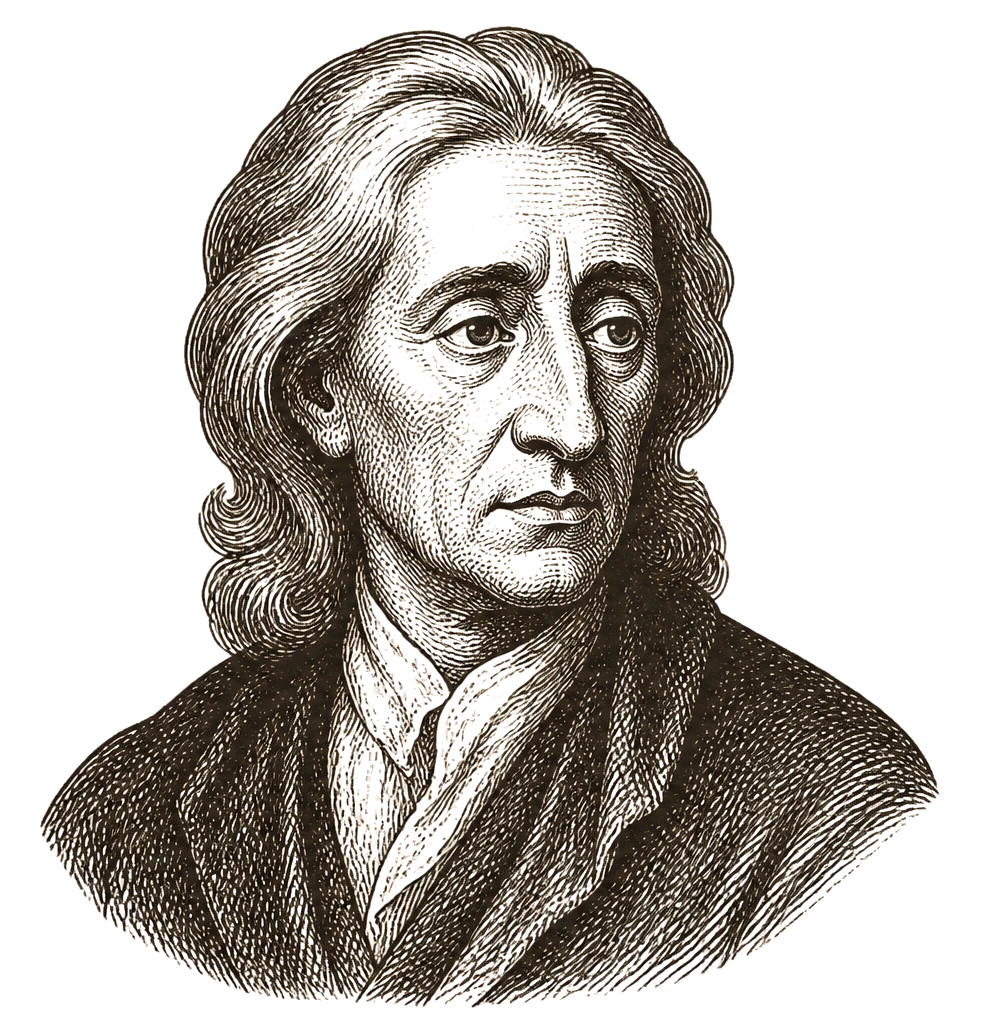
Locke's New Method does not only explain the index. In the same little book he shows what he put under the heads. The 1823 Works pages are open on Wikisource; the 1706 London pamphlet is on the Internet Archive. The items are his own examples.
Before he writes an item, he enters the book it came from: author, title, size, place, year, and the number of pages in the whole volume. Under M a he sets Marshami Canon Chronicus Ægyptiacus, folio, London, 1672, 626 pages. Later he only needs the page of the item over that total — 259 over 626 — so another edition can be found again by proportion.
Under Acherusia he collects from Diodorus Siculus, by way of Marsham: the fields of the dead as a place near Memphis, beside a marsh; lotus and calamus; the boat called Baris; the ferryman Charon; gates of Cocytus and Lethe; a statue of justice without a head. The head sits in the margin. The recollection sits under it.
Under Ebionitæ he collects from Grotius: a rich man scratching his head at the counsel to love the neighbour; Simon and the camel; Ebion altering the Gospel because he would not have Christ as lawgiver. Page over total again — 333 over 1060.
Elsewhere in the pamphlet the same hand takes Augustine on heretics — gentle speech, not harsh treatment — and Hilarius on confessions of faith that multiply with wills. The heads stay Latin, in the nominative. He would keep separate volumes for moral philosophy, for natural, and for the knowledge of signs.
What he actually collected was not a scrap for display. It was an item under a head, with a way back to the book it came from, ready for a later recollection.
How to keep a commonplace book · The letter · 1 · Opuss on the App Store
Sources: John Locke, "A new Method of a Common-Place-Book," in The Works of John Locke, vol. 3 (1823), sample items under Acheron and Ebionitæ via Wikisource. First English pamphlet, London, 1706: Internet Archive.
You may also like
The letter
Read issue 1. Ten we kept this week, and how to keep your own. Or start with how to keep.